Walking the Sacred Mountains of Japan
A Journey of Rebirth
Dewa Sanzan is the collective name for three sacred mountains in Yamagata Prefecture: Mt. Haguro, Mt. Gassan, and Mt. Yudono.
Since its founding more than 1,400 years ago, the region has been one of the most important centers of Shugendo, Japan's ancient mountain ascetic tradition.
During the Edo period, pilgrims believed that visiting the three mountains represented a journey through the present, the past, and the future—a symbolic path of spiritual rebirth.
Even today, surrounded by deep forests and centuries-old traditions, these sacred mountains offer visitors a rare opportunity to step beyond ordinary time.
The Great Torii
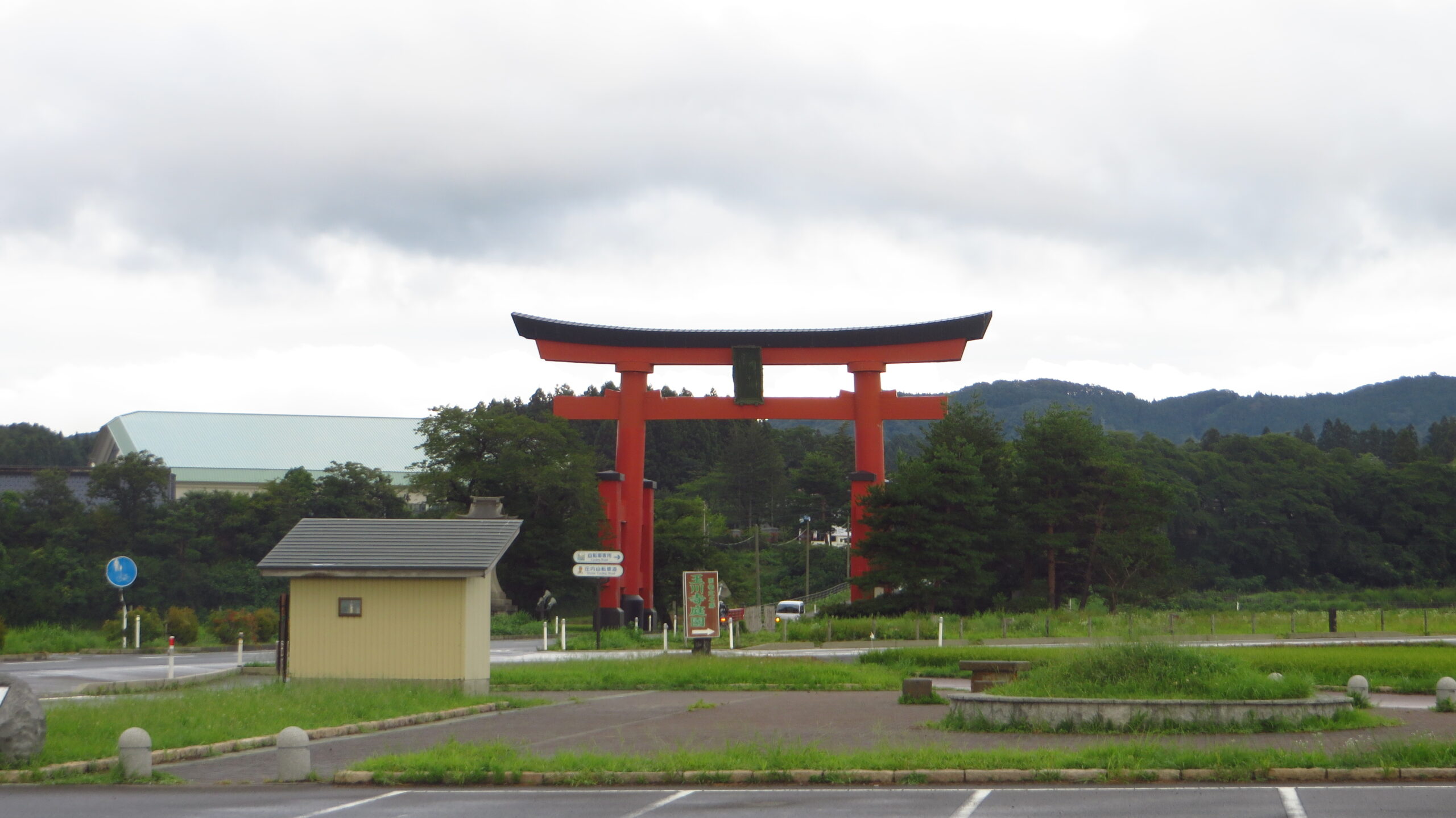
The immense Great Torii of Mt. Haguro stands as the entrance to the sacred mountains.
In Japan, a torii marks the boundary between the ordinary world and sacred space.
Passing beneath it means entering the spiritual realm of Dewa Sanzan, where countless pilgrims have begun their journeys for centuries.
The Journey of Rebirth begins here.
The Pilgrims' Lodges
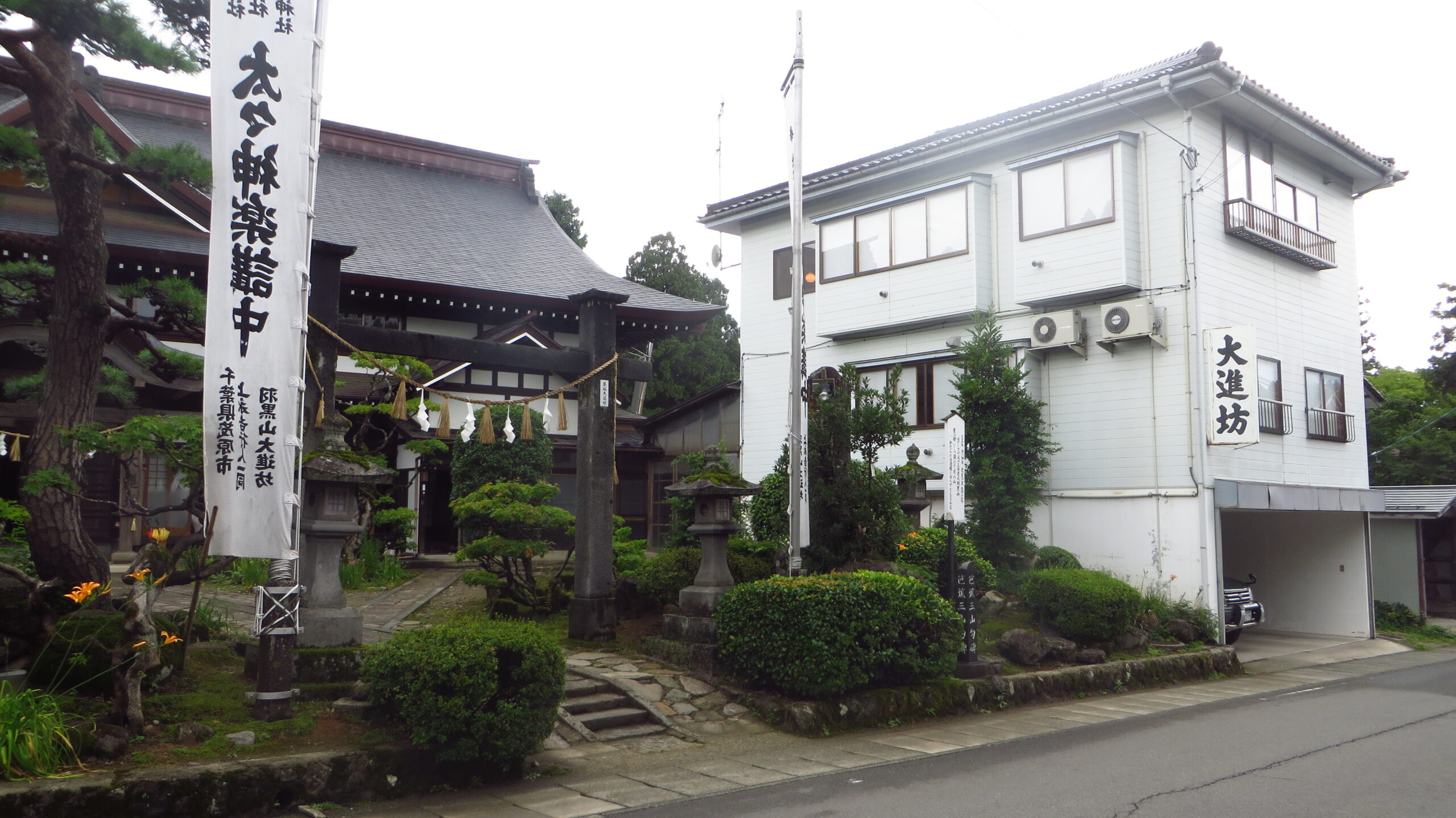
Shukubo are traditional pilgrim lodges associated with temples and shrines.
Originally built to accommodate pilgrims and ascetic monks, they remain in use today. Many now welcome ordinary visitors, offering experiences such as morning prayers and traditional shojin ryori (Buddhist vegetarian cuisine).
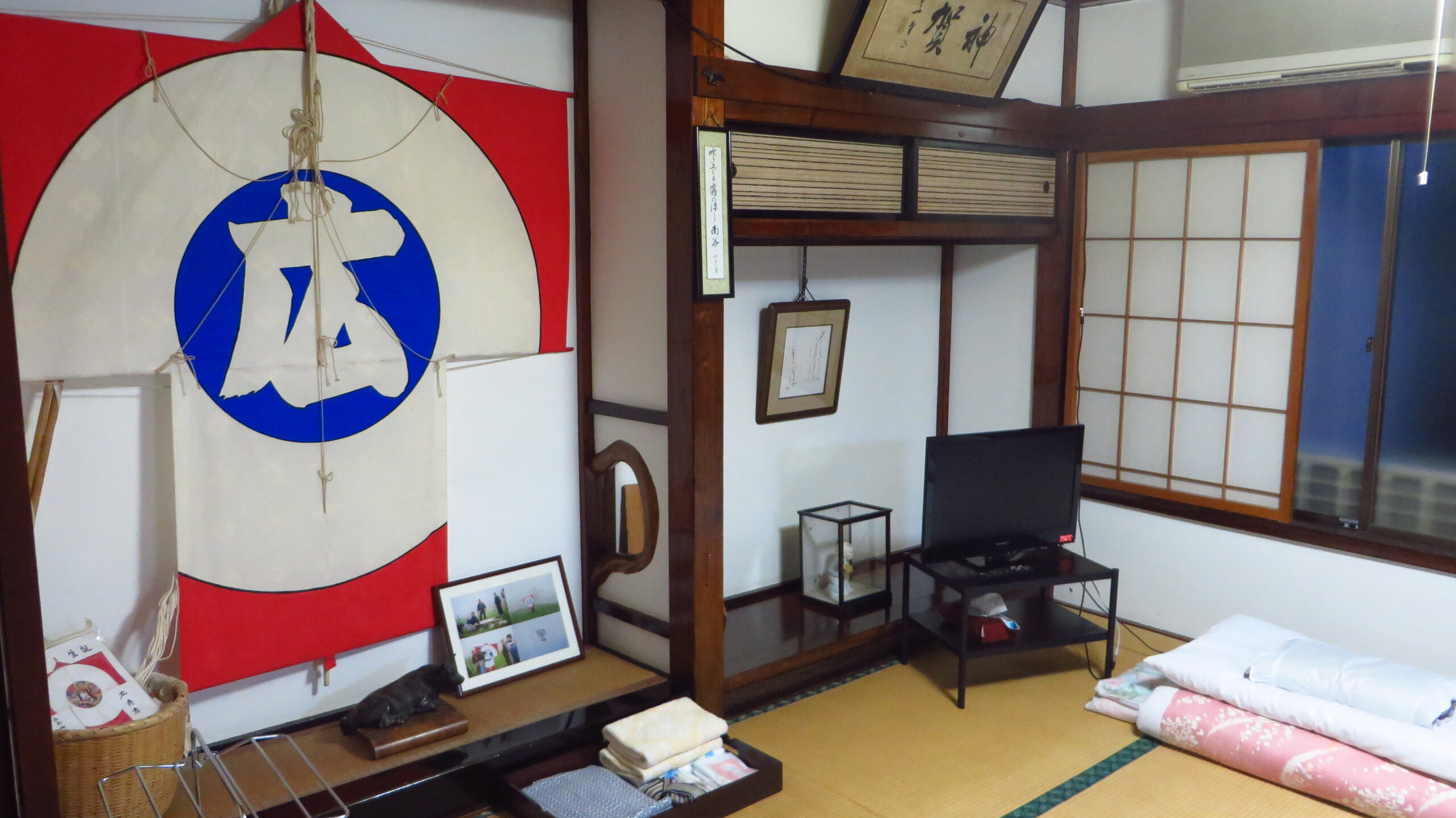
Spending a night in a shukubo soon reveals that this is more than a sightseeing destination—it is a place where the spirit of pilgrimage still quietly lives.
Walking Through the Cedar Forest
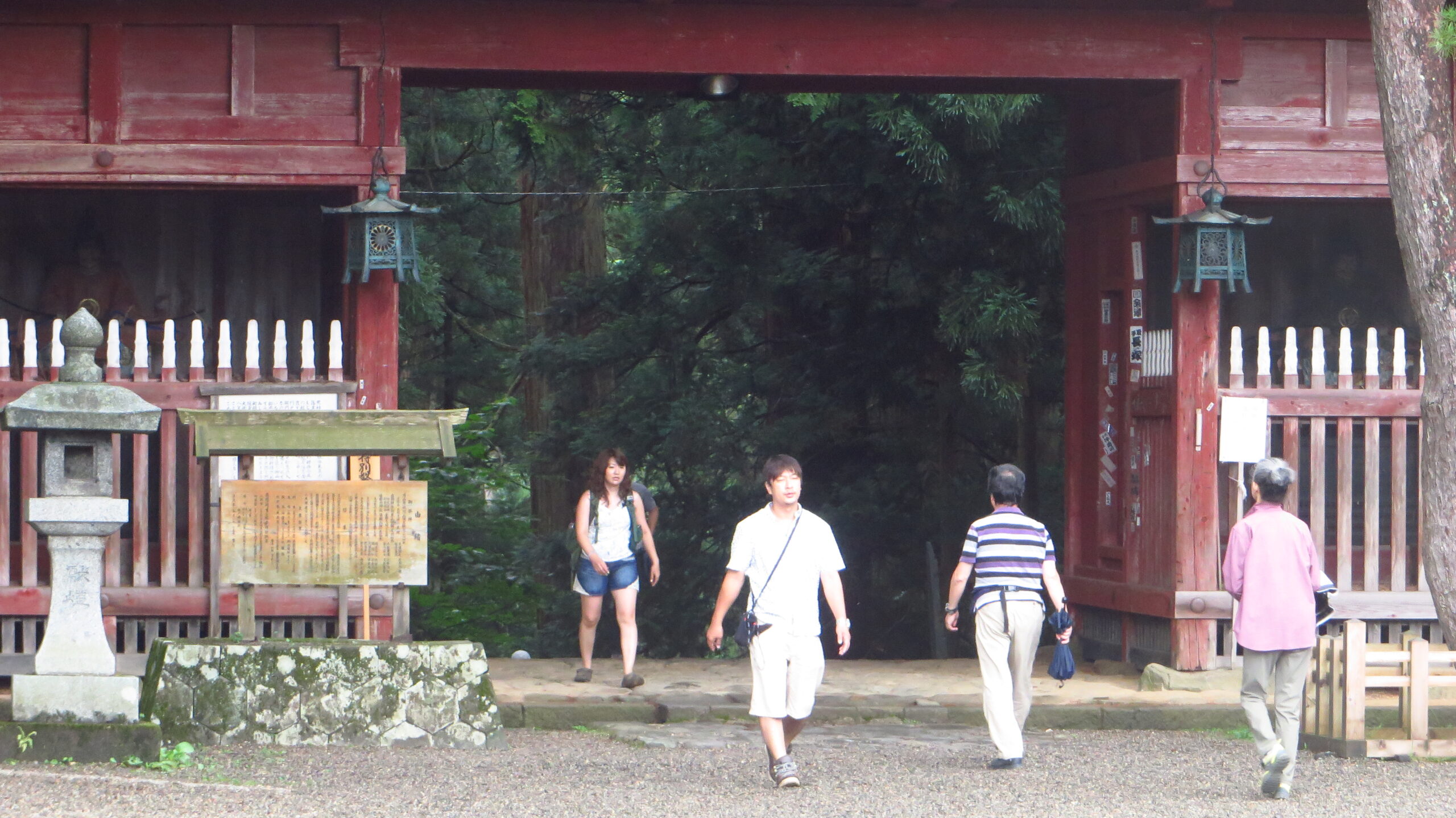
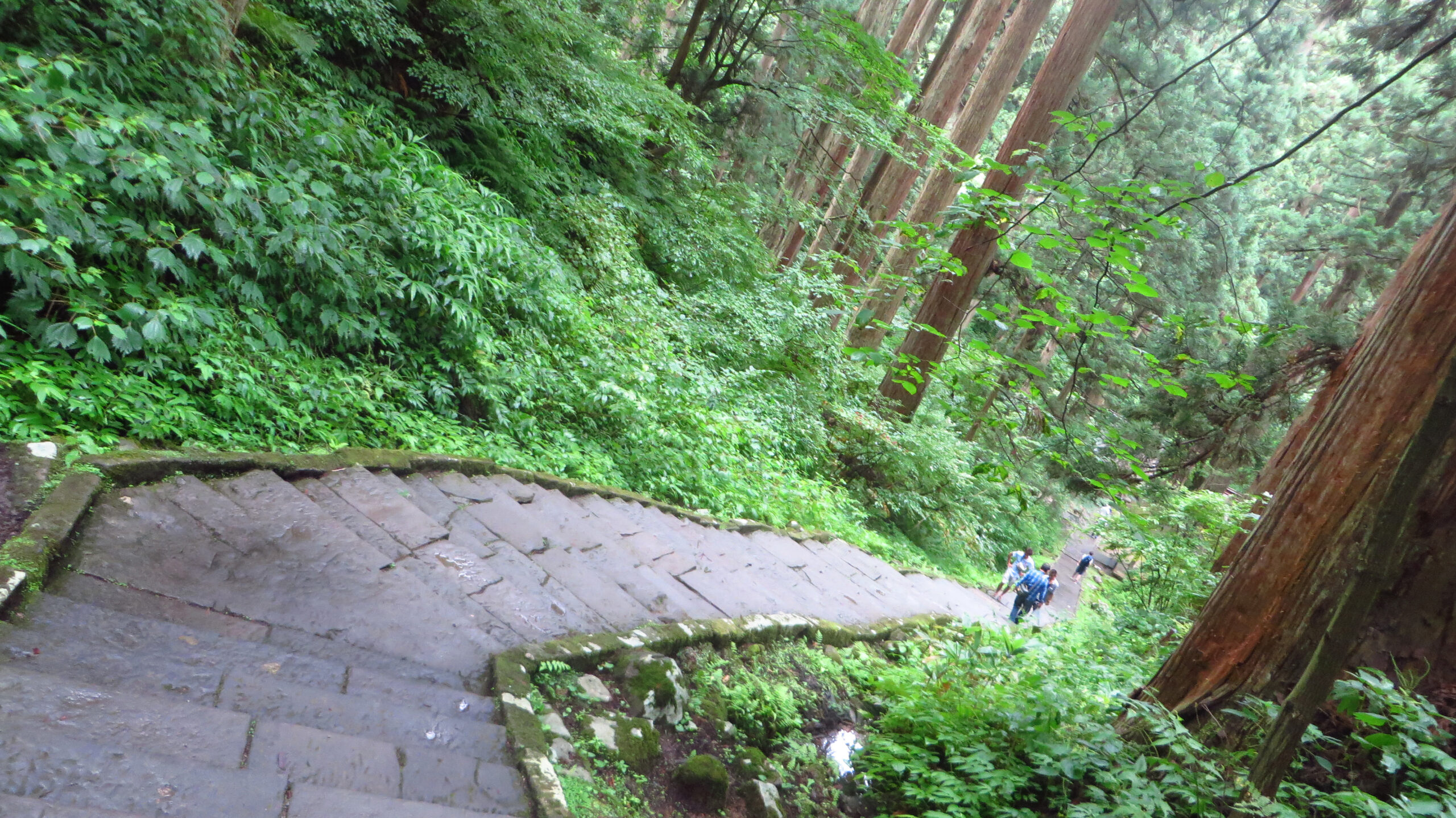
The pilgrimage truly begins here.
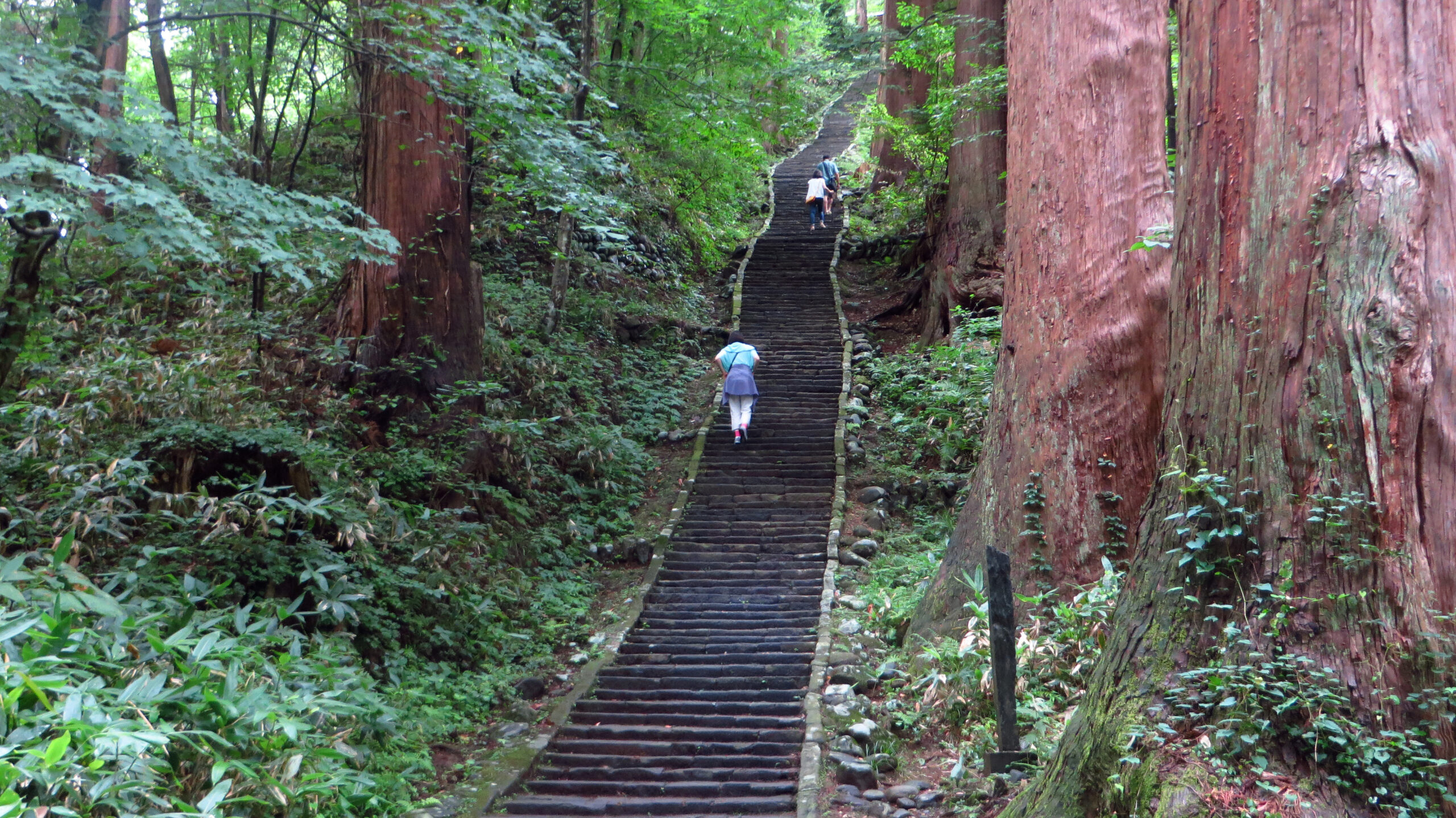
Passing through Zuishinmon Gate, the path descends steeply into the forest. Traditionally, this descent symbolizes entering the world of death.
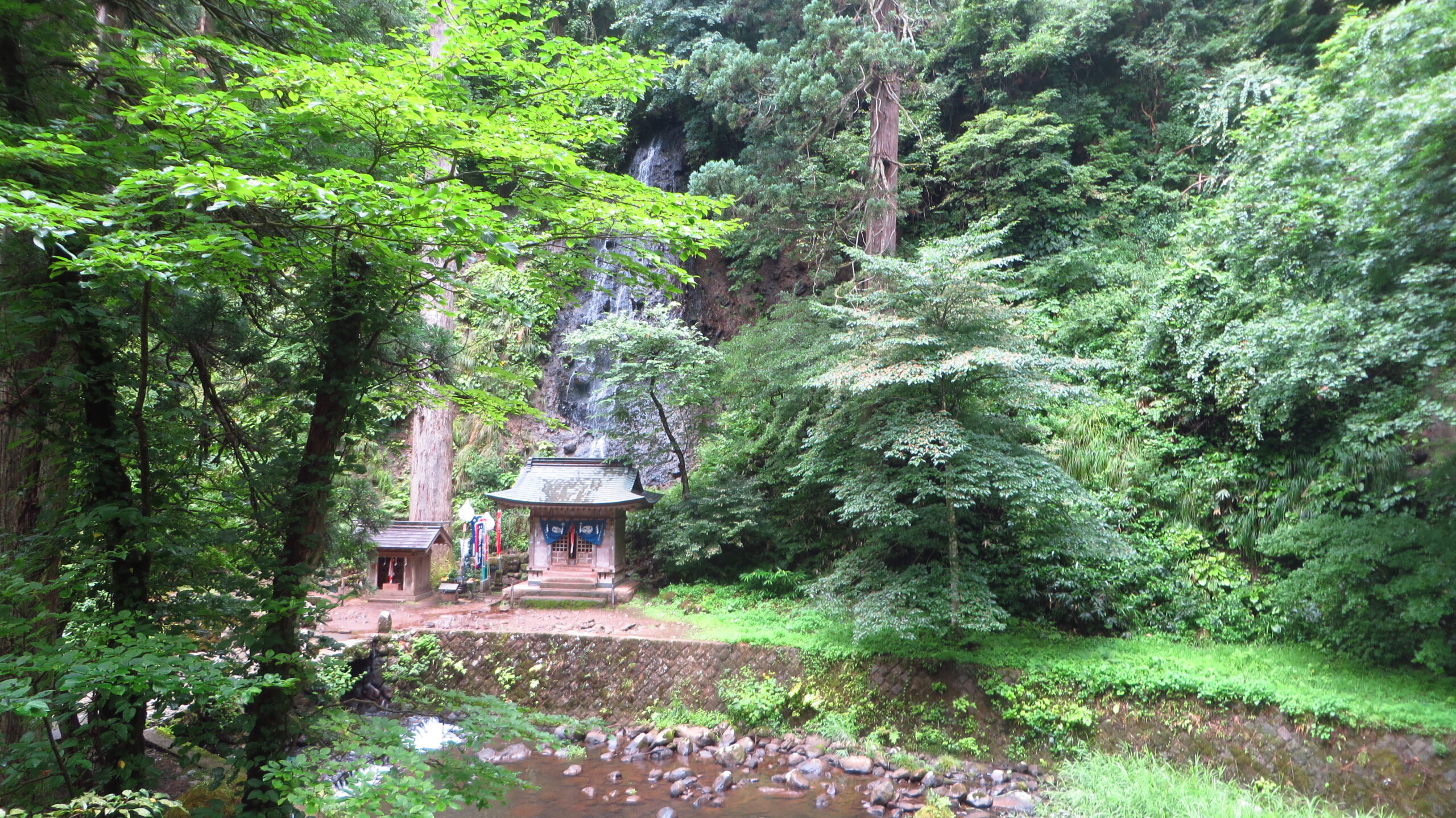
Soon, Suga Waterfall appears, where practitioners of Shugendo once purified themselves before continuing their journey.
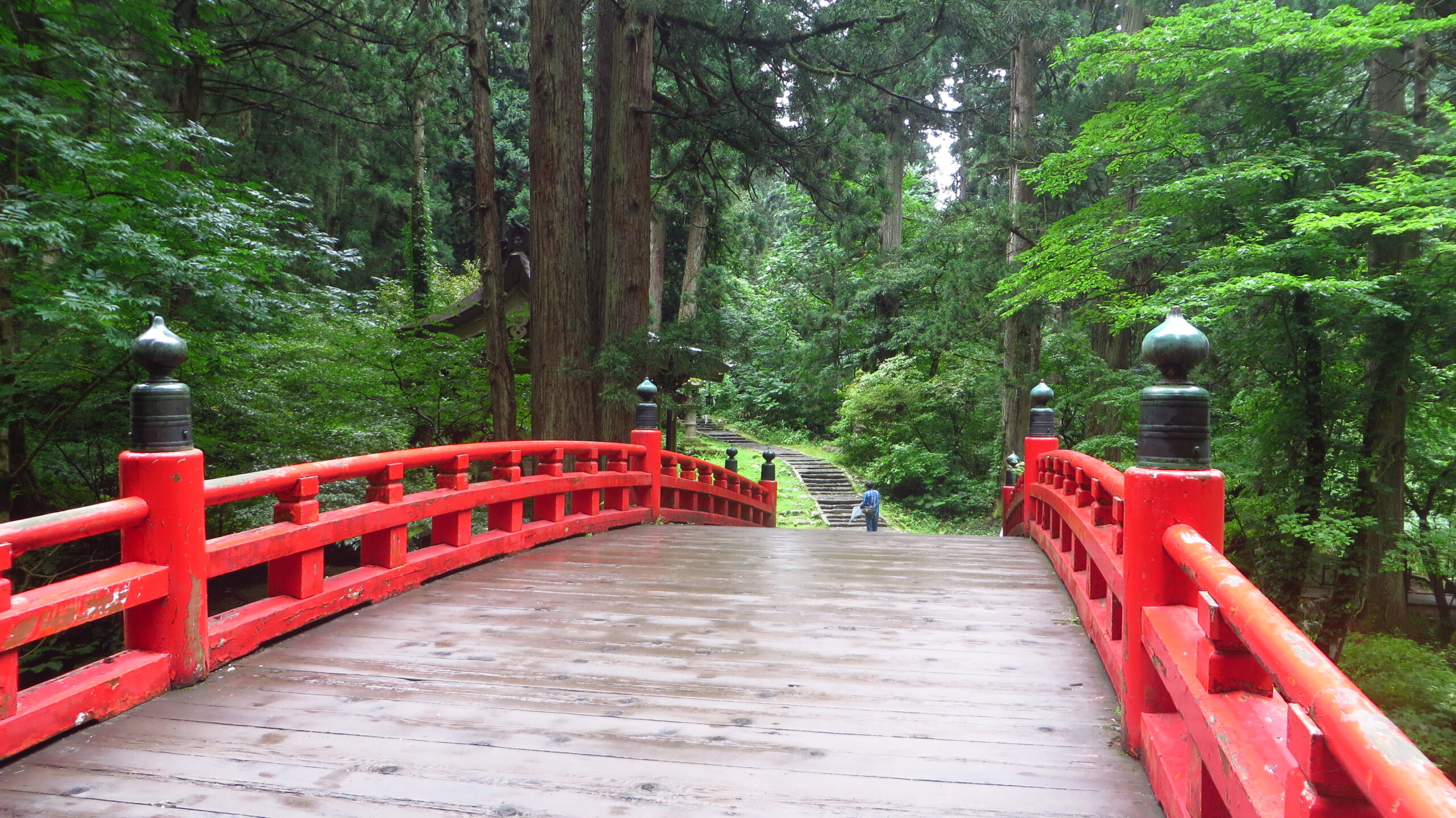
Crossing the red bridge over the stream—symbolizing the mythical Sanzu River—pilgrims leave the ordinary world behind and enter the realm of spiritual rebirth.
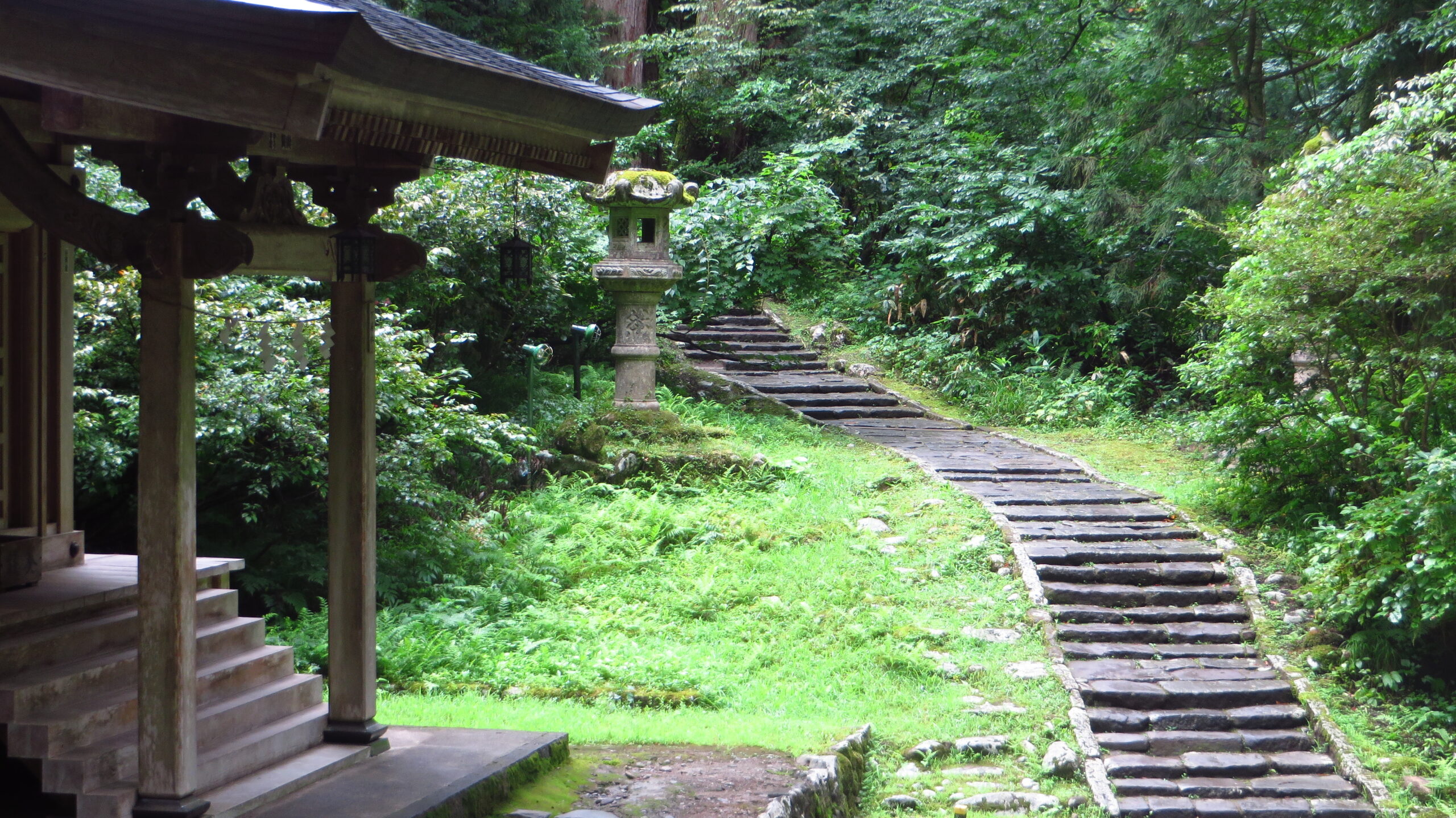
In summer, the sound of cicadas echoes endlessly through the towering cedar forest, creating the strange sensation of walking inside the earth itself.
The Five-Story Pagoda
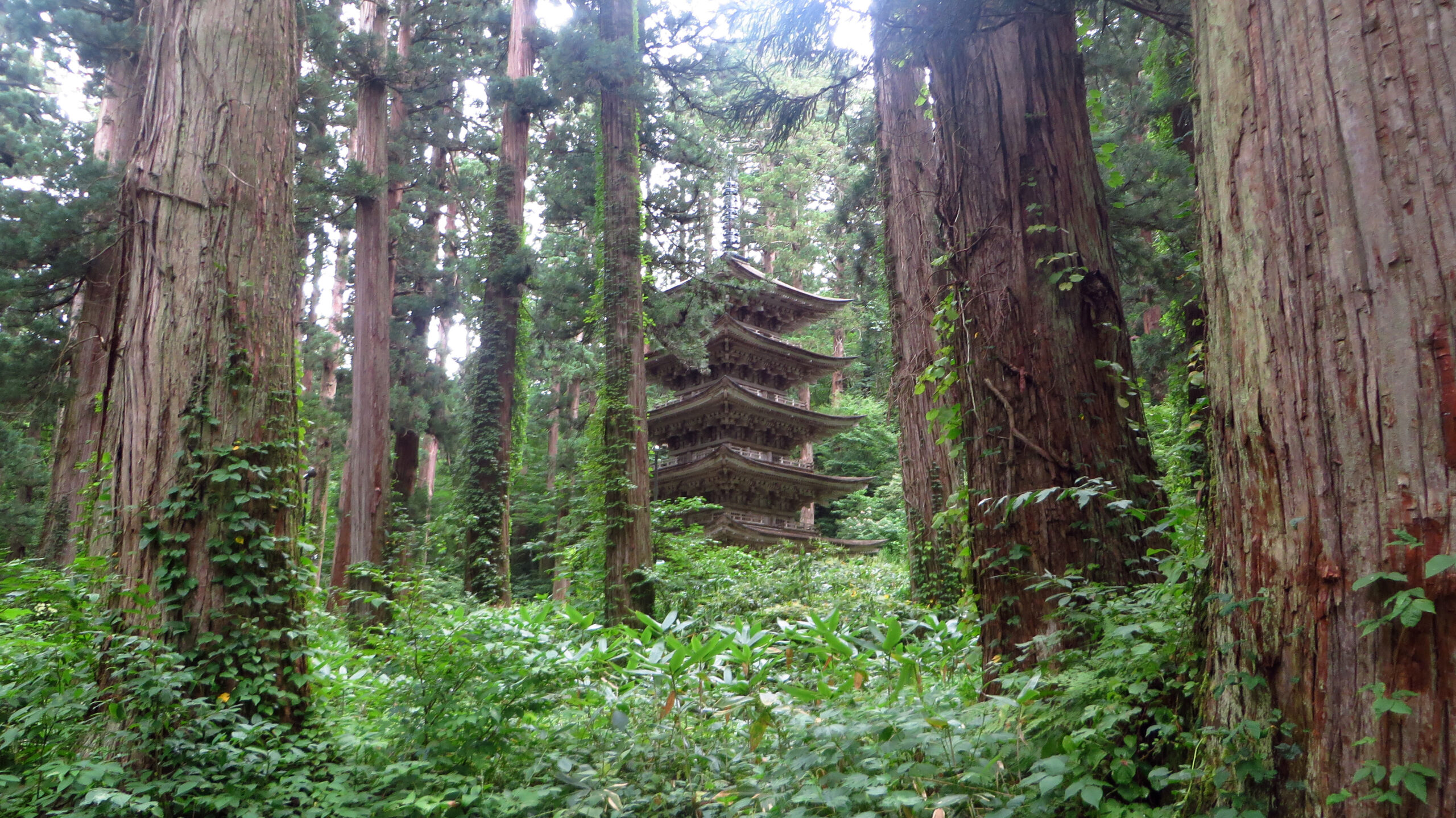
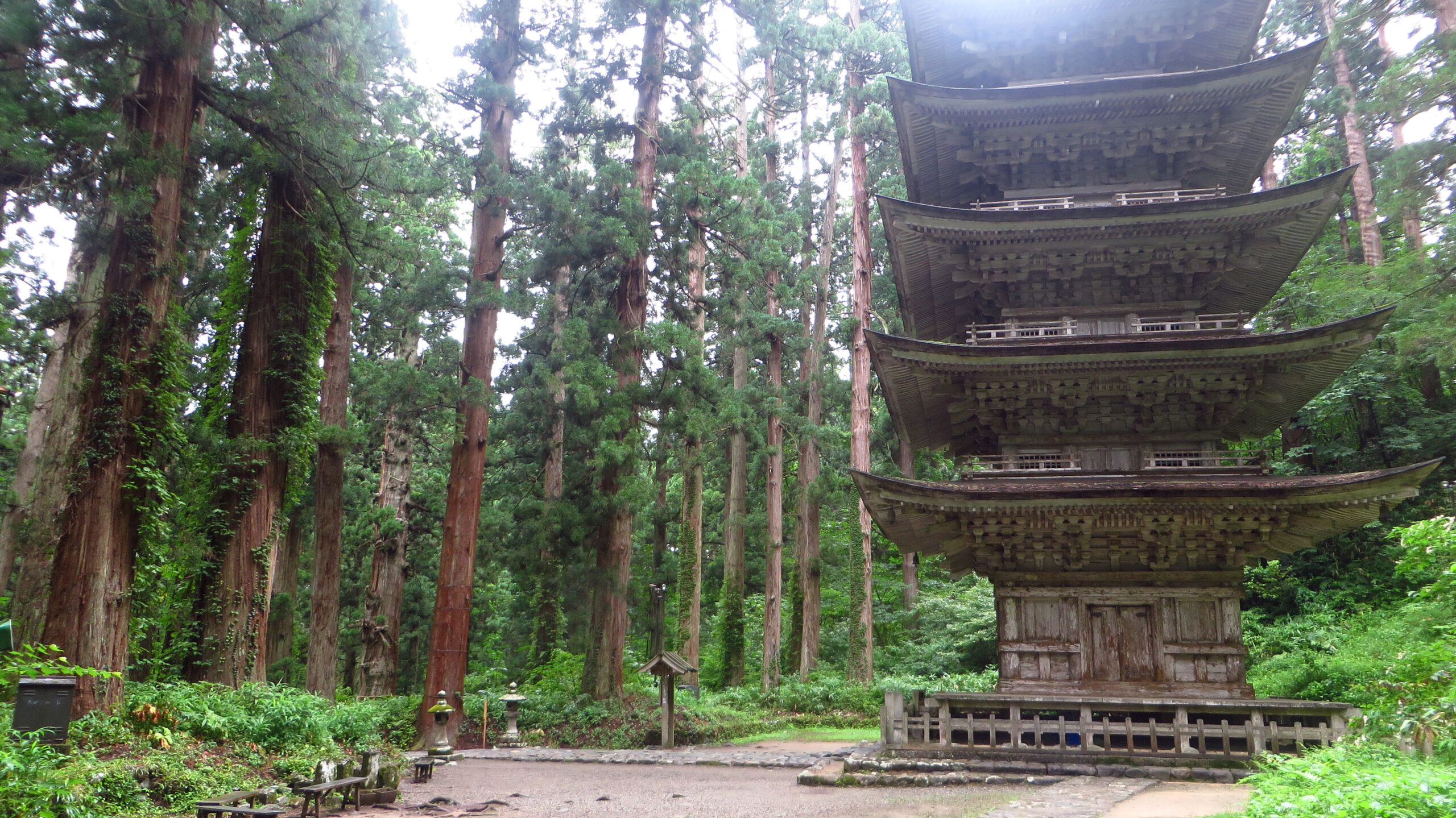
Hidden deep within the cedar forest stands the Five-Story Pagoda, the oldest National Treasure pagoda in the Tohoku region.
Surrounded by centuries-old cedar trees, the unpainted wooden structure has quietly watched over these mountains for more than six hundred years.
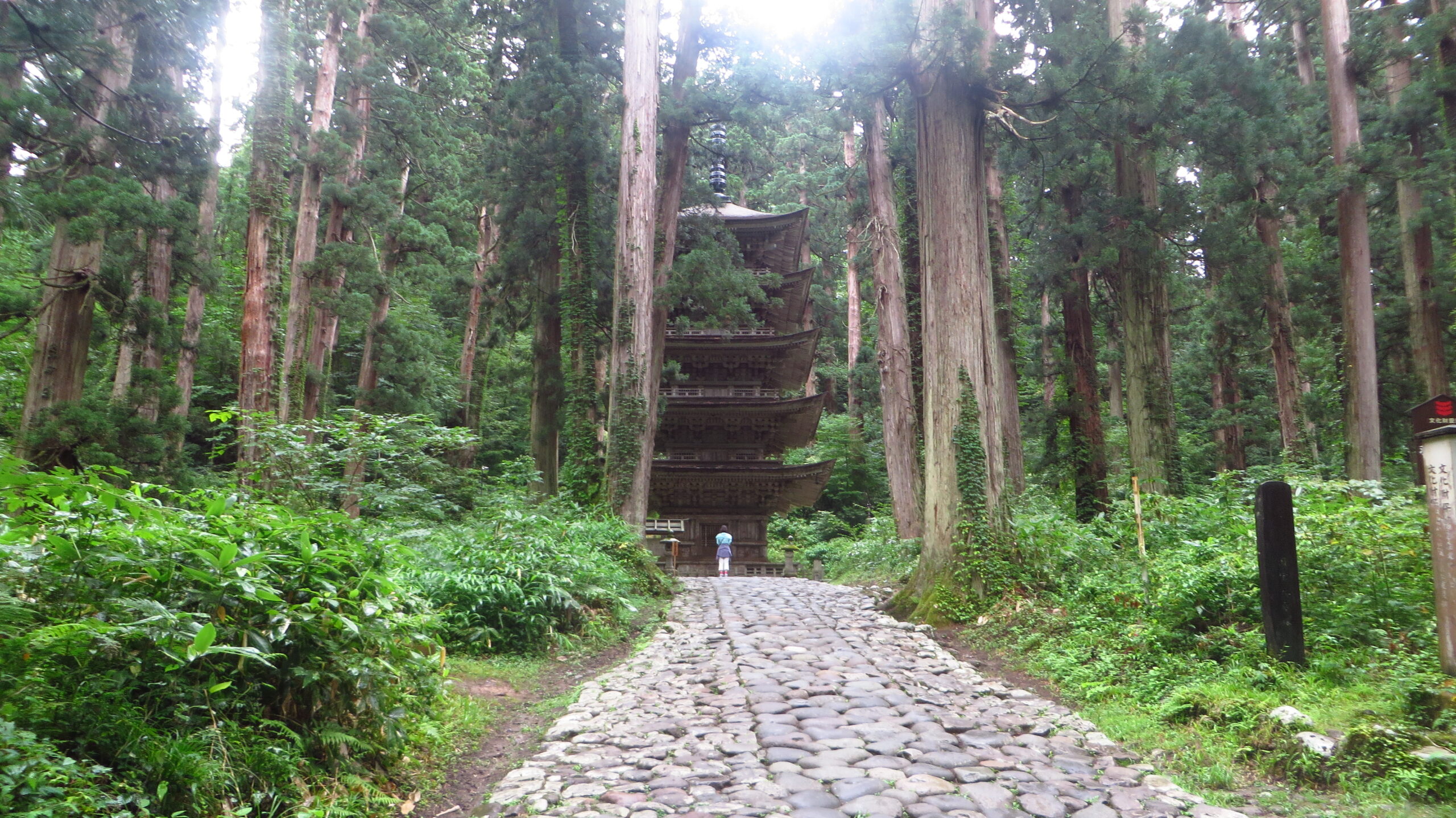
Standing before it, the pagoda itself seems to embody the quiet discipline of those who have walked this pilgrimage for generations.
At the Summit
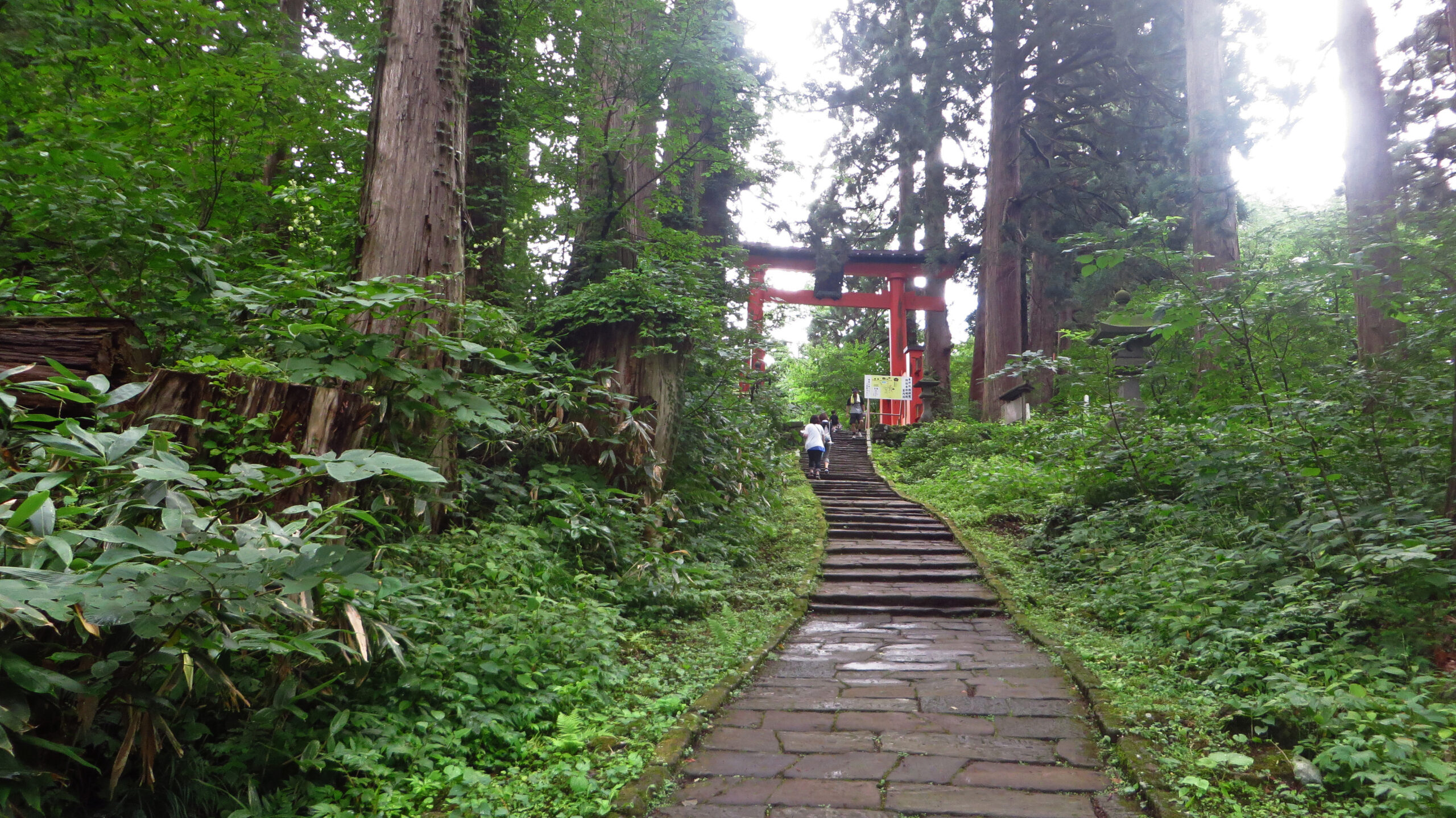
After climbing the long stone stairway, visitors finally arrive at the summit of Mt. Haguro.
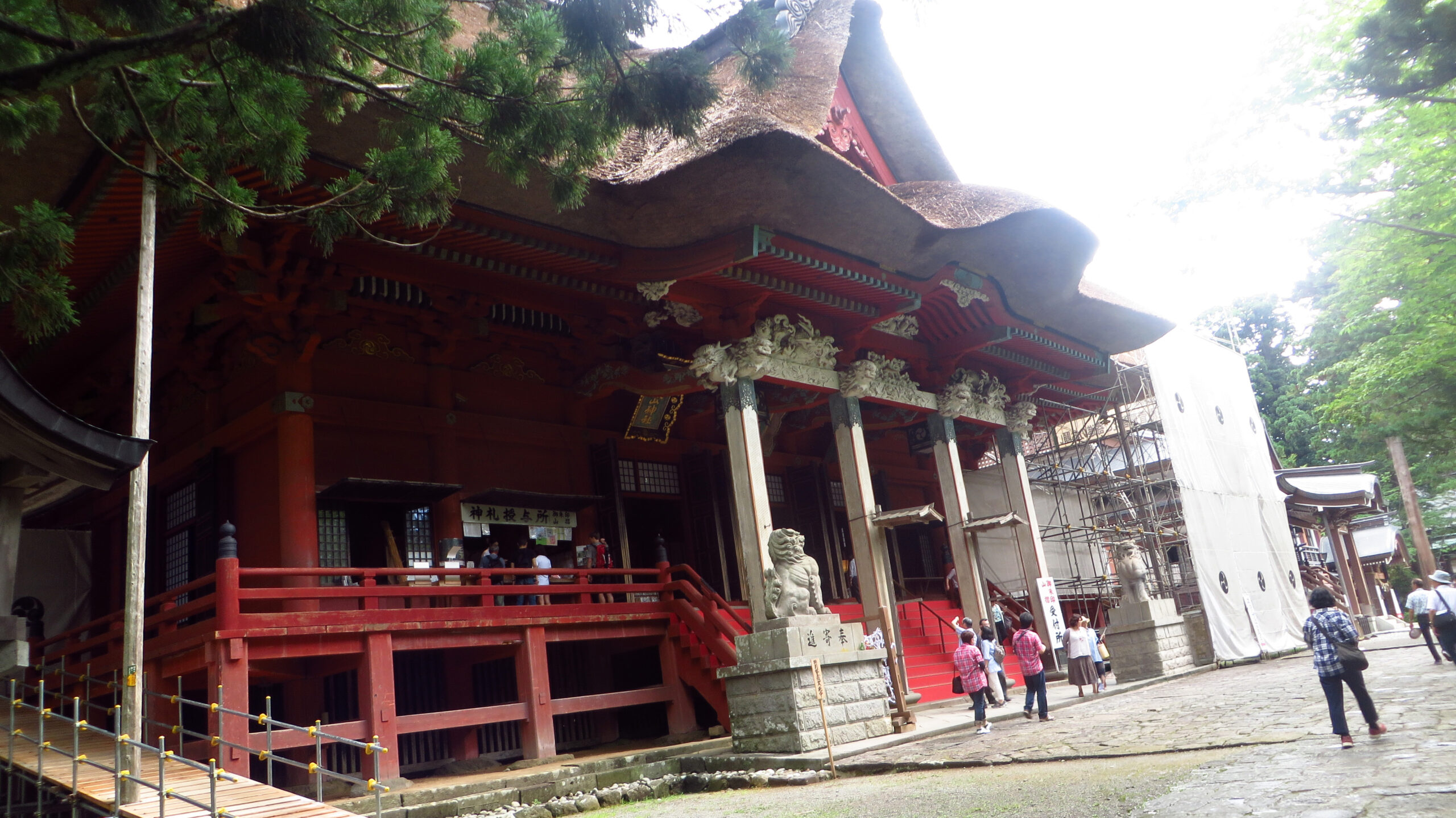
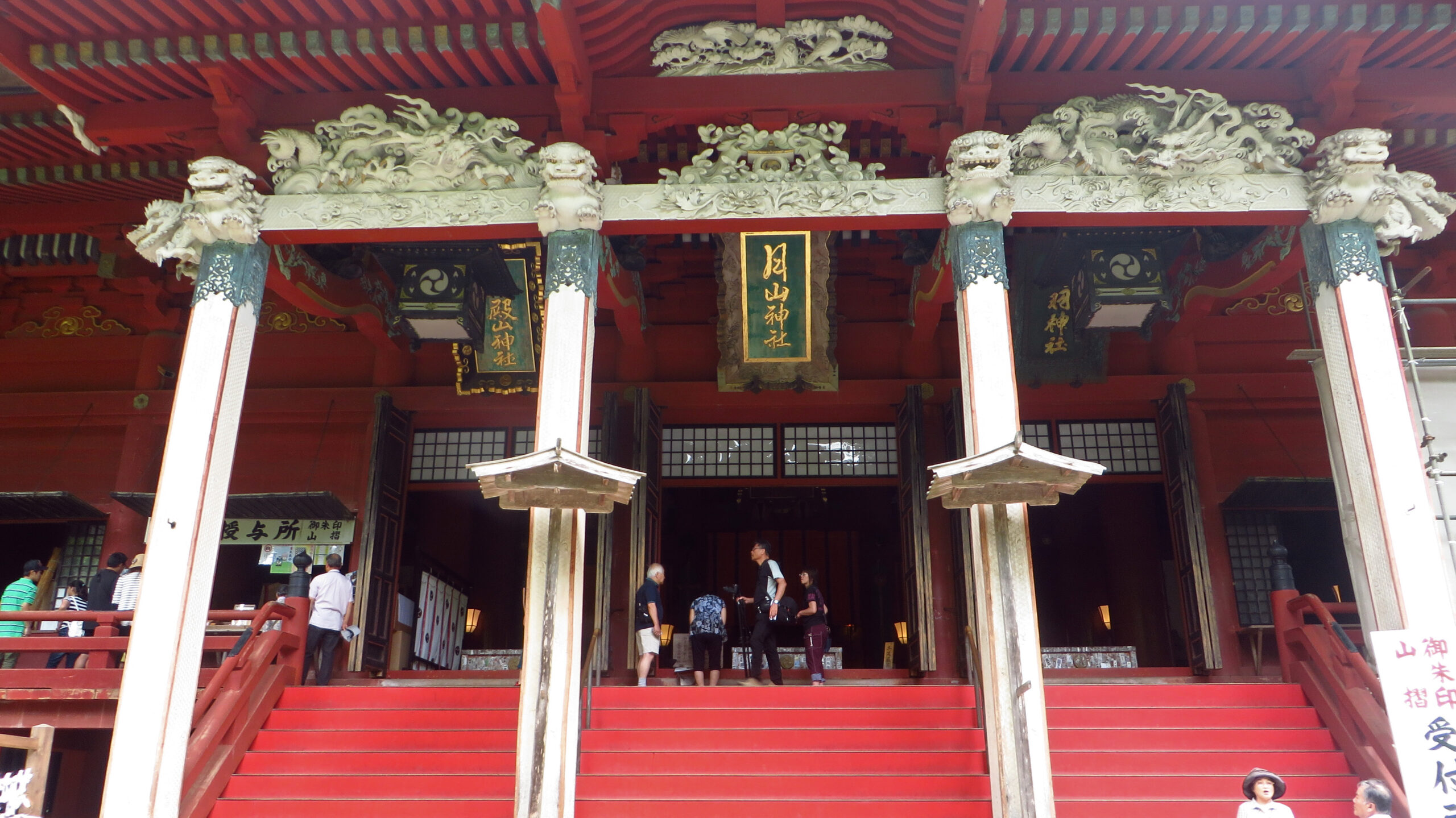
The quiet forest suddenly gives way to the vibrant colors and imposing architecture of Sanjin Gosaiden, where the deities of all three sacred mountains are enshrined together.
Mt. Haguro represents the present, while Mt. Gassan symbolizes the past, and Mt. Yudono the future.
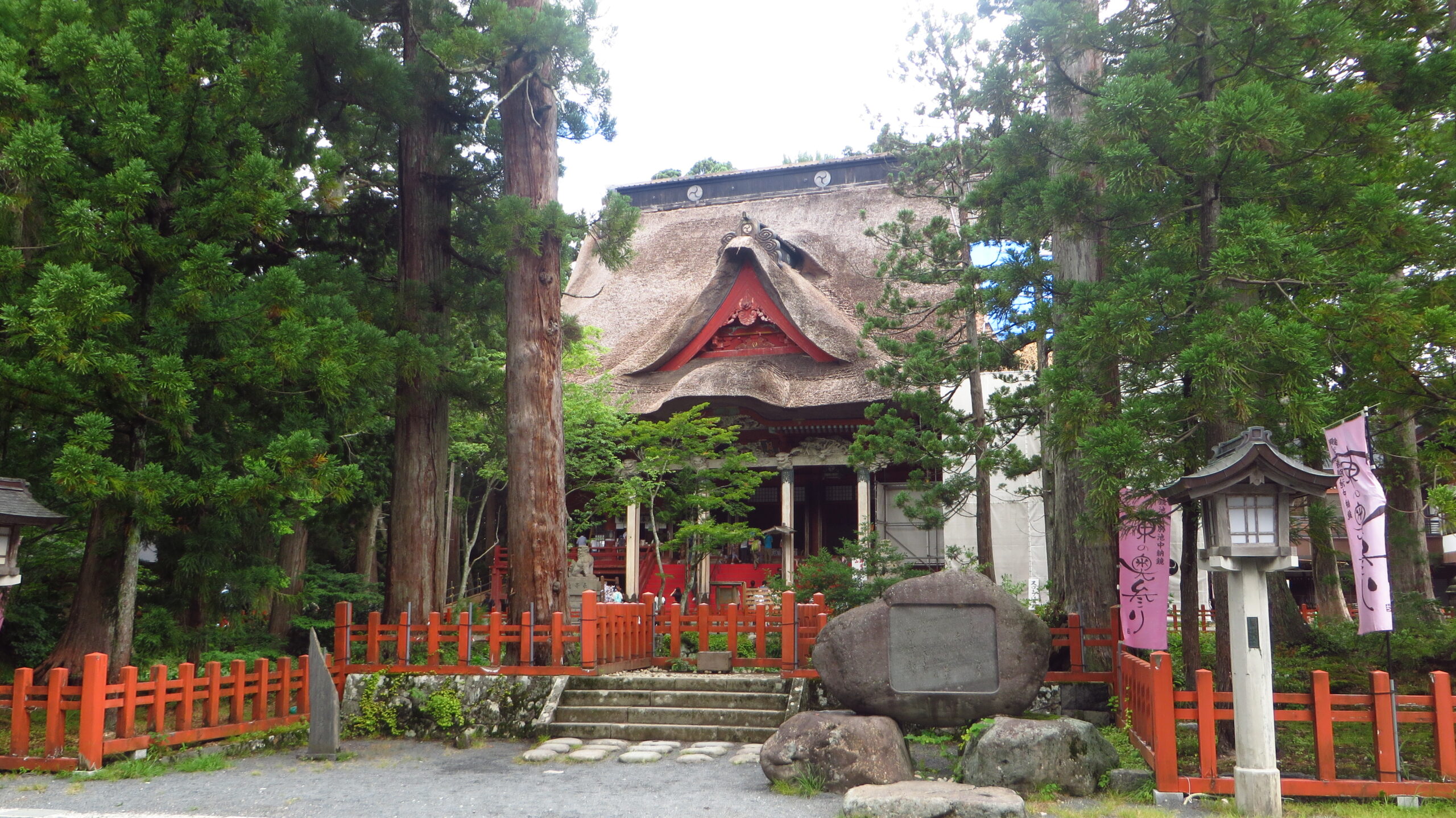
For many pilgrims, worshipping here connects them spiritually to all three mountains, even without completing the entire pilgrimage.
Toward Mt. Yudono
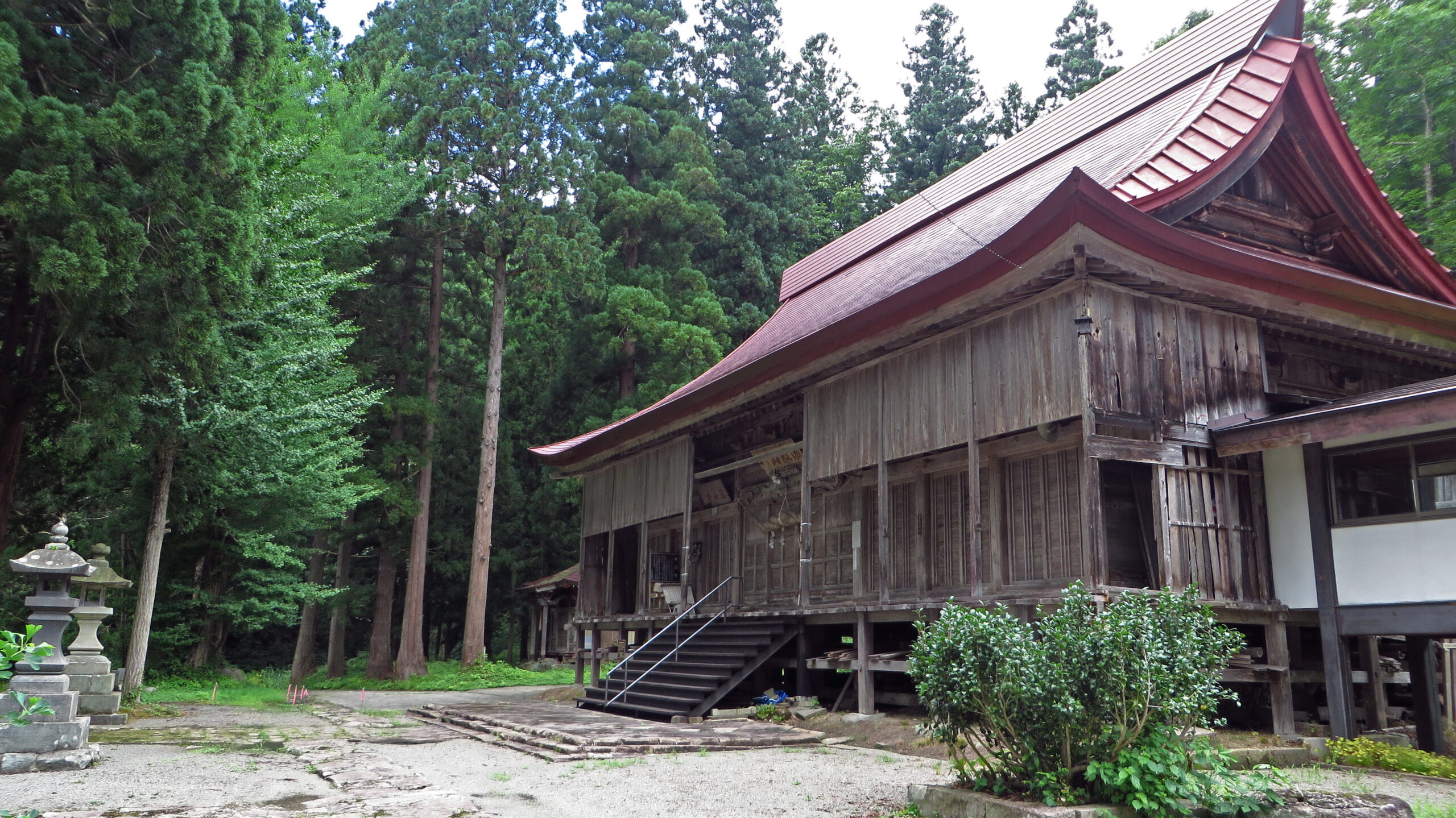
The journey does not end at Mt. Haguro.
Hondoji Kuchinomiya Yudonosan Shrine once served as one of the principal gateways to Mt. Yudono, welcoming countless pilgrims during the Edo period.
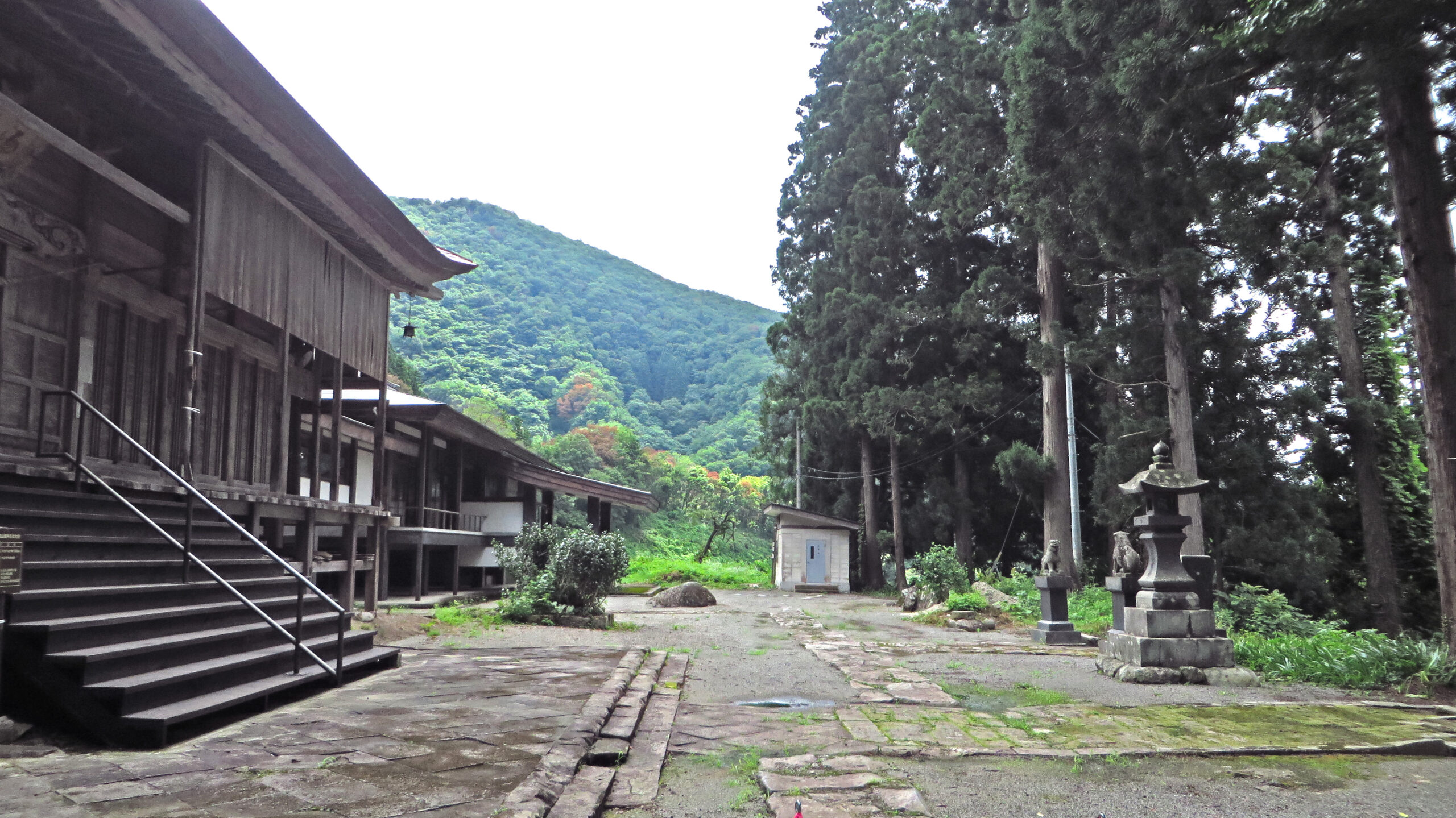
Today, the shrine stands in quiet solitude, where only the wind and the surrounding forest seem to accompany those who visit.
Beyond the Gate
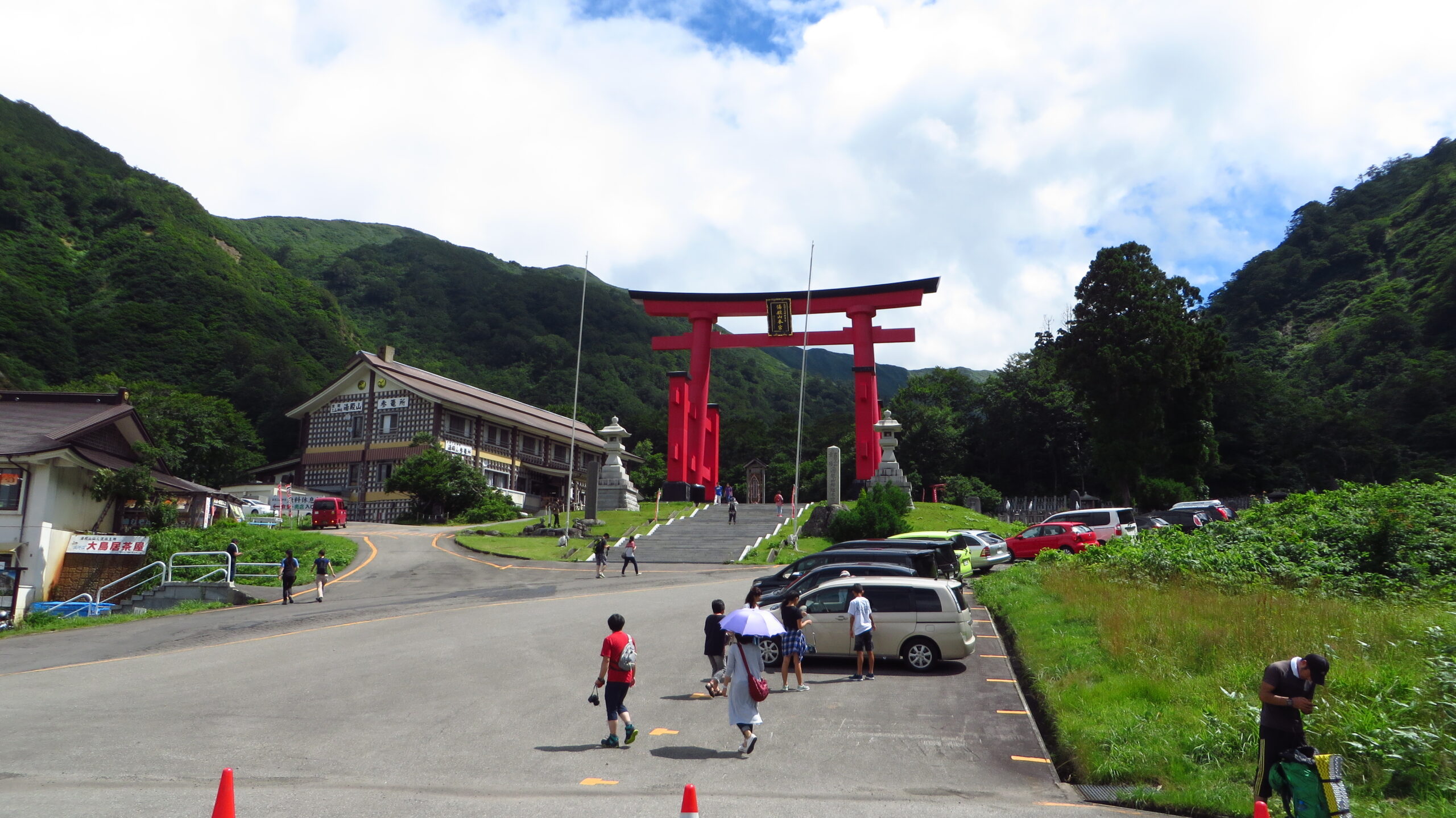
Mt. Yudono Shrine is regarded as the innermost sanctuary of Dewa Sanzan.
Unlike most shrines, it has no main building. Instead, nature itself is worshipped as the sacred object.
For centuries, visitors have been asked not to speak of what they experience beyond the shrine's gate.
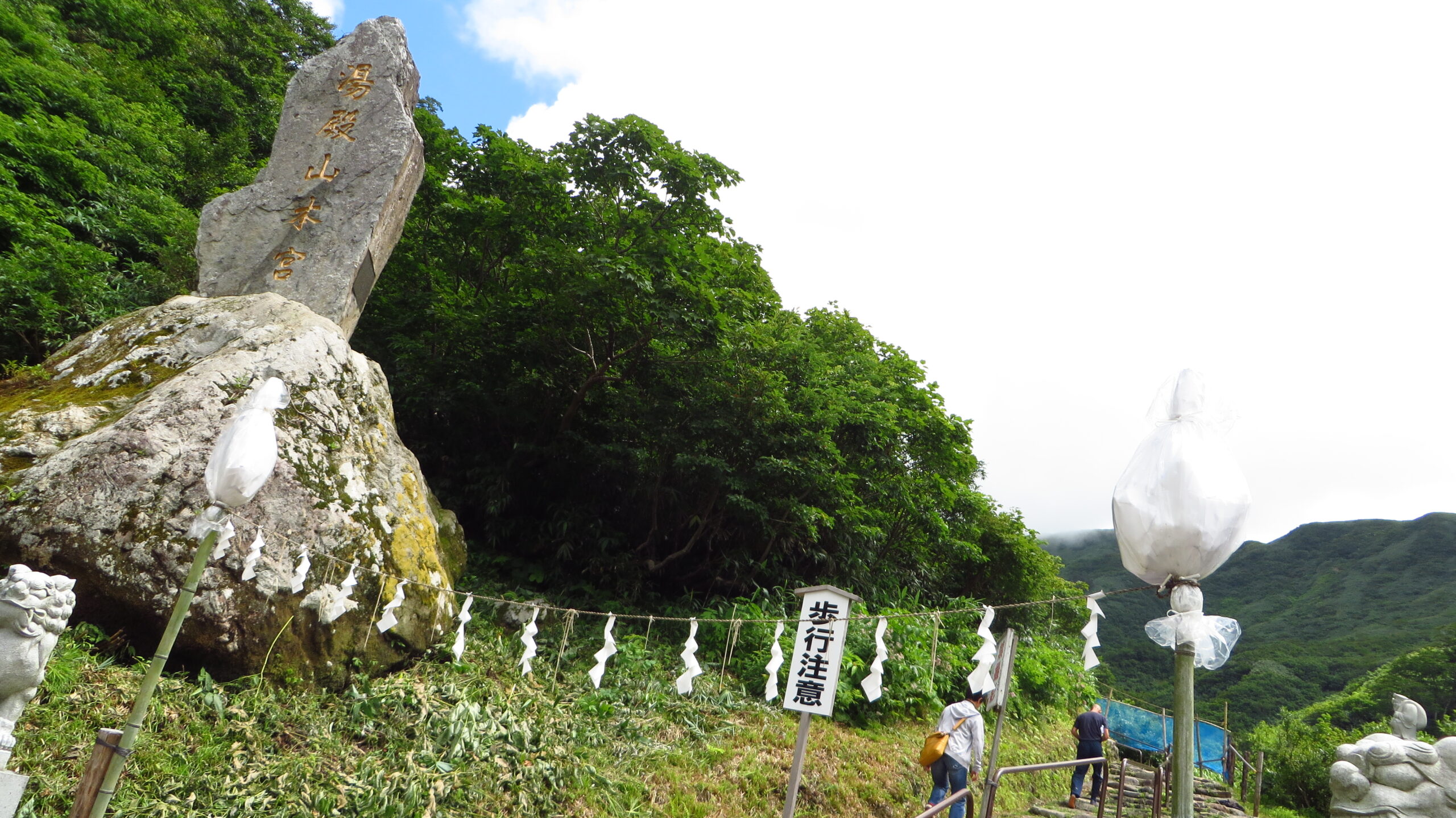
Photography is still prohibited beyond this point.
Pilgrims remove their shoes and walk barefoot across warm stones and flowing water before touching the sacred rock from which hot spring water emerges.
It is a deeply personal experience—and perhaps one of the hardest secrets to keep.
Epilogue
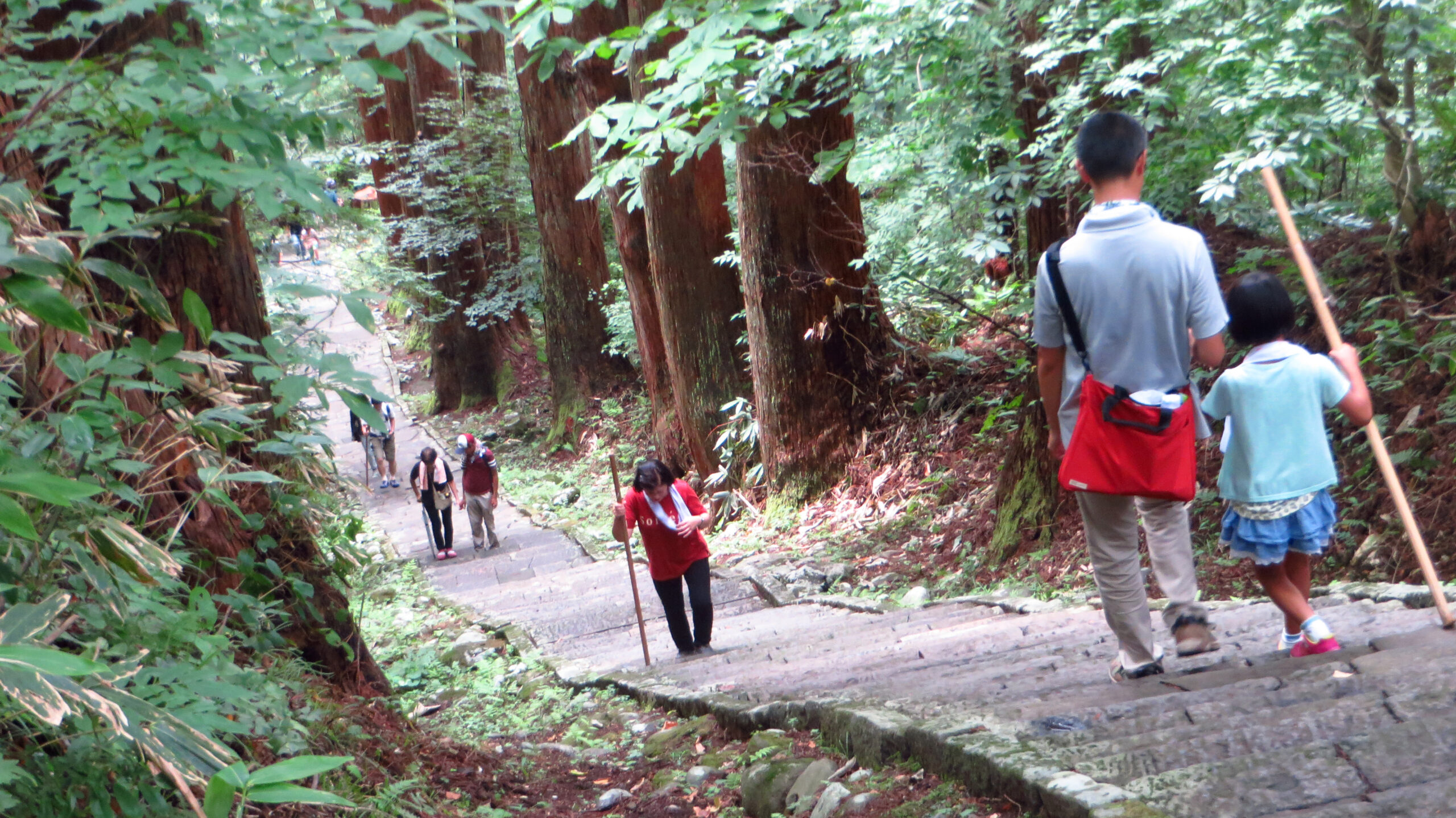
A pilgrimage to Dewa Sanzan is not a journey that many people make lightly.
As you climb and descend the long stone stairways, something unexpected begins to happen.
Time seems to slow, and the thoughts of everyday life gradually fade away.
Among these mountains, the present feels connected to both the past and the future.
Perhaps the pilgrims who walked these same paths during the Edo period discovered exactly the same feeling.
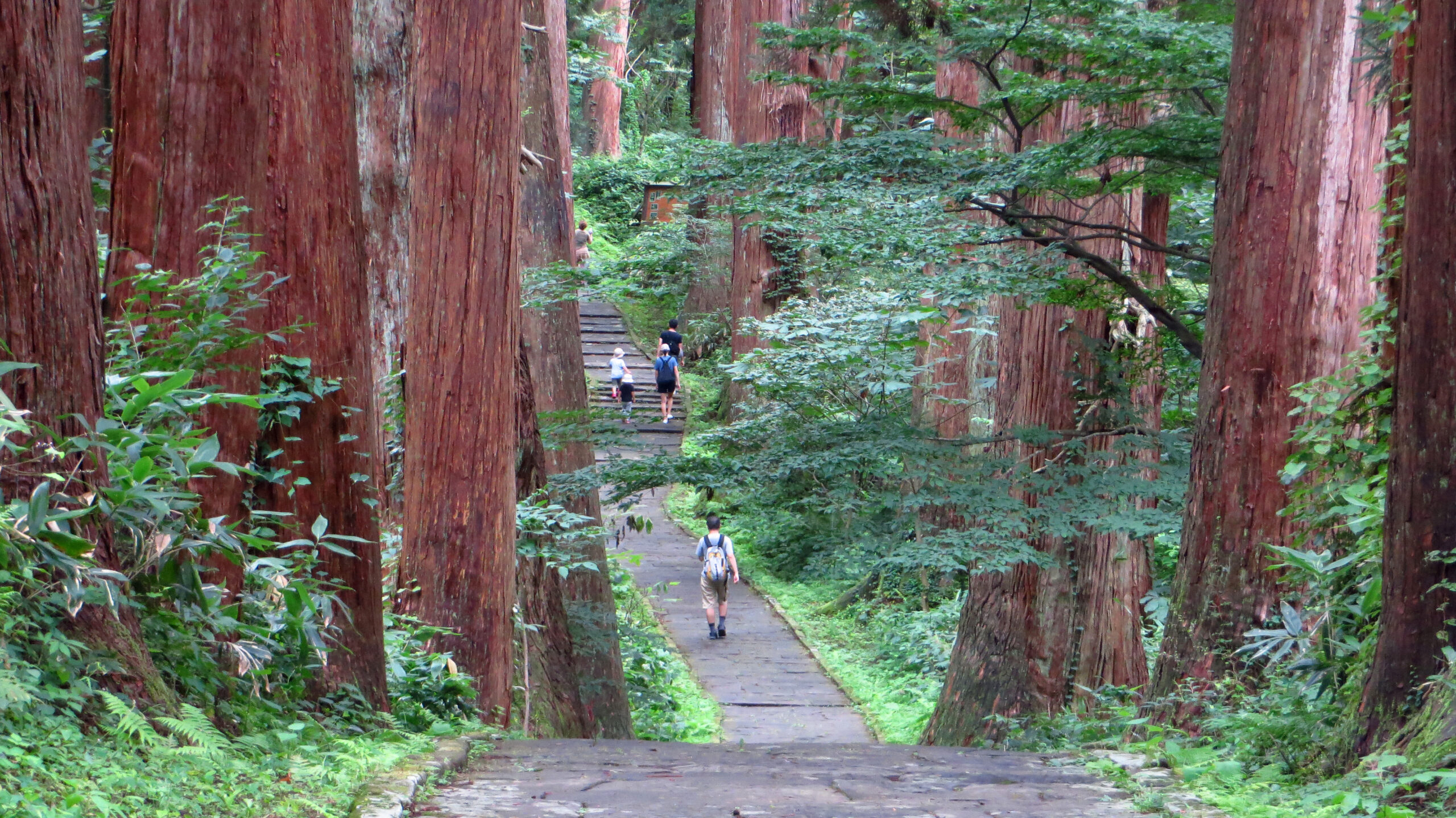
Archive Information
| Location | Dewa Sanzan, Yamagata Prefecture, Japan |
| Photographed | 2015 |
| Collection | 72 photographs |
| Published | 2026 |
| Series | PATHS OF JAPAN Vol.8 |
Related Collection

Paths of Japan Vol.8
DEWA SANZAN – The Sacred Mountains of Japan 2015
Explore the complete photographic archive of Dewa Sanzan.